Showing posts with label What is an LCD TV. Show all posts
What is an LCD TV?
What is an LCD TV?
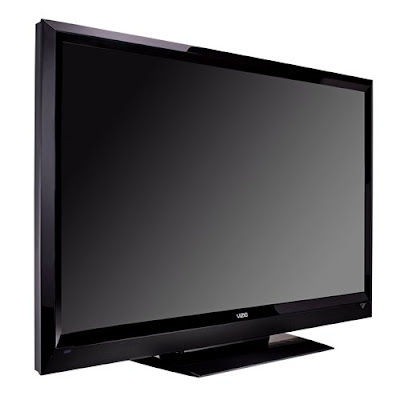
An LCD TV is a flat panel digital television that uses Liquid Crystal Display (LCD) technology verses the competing plasma technology or the older cathode ray tube (CRT) technology. LCD is also used in computer displays, and an LCD TV is simply a larger monitor with a built-in TV tuner, or with the ability to display high definition resolutions fed from a set-top digital display box provided by a cable TV or satellite vendor.
LCD TV and plasma TV are the two leading types of high-definition televisions today, easily spotted by their thin profiles of just a few inches. Old-style CRT TVs had an extremely deep footprint to accommodate a vacuum tube device. CRT TVs are also very heavy with a 36-inch (91cm) model weighing over 230 pounds (108km), while an equivalent LCD TV weighs closer to 37 pounds (17kg) and can be hung on the wall like a movie screen.
LCD TV uses a five-layer technology within the panel to bring colors and pictures to life. These layers consist of a backlight, polarized glass, a colored pixel mask, liquid crystal solution, and a second sheet of polarized glass. Each pixel in the LDC screen has a dedicated transistor that manipulates the orientation of crystals through precise electrical charges and voltages. Crystal orientation acts like a shutter to block or allow the backlight to flow through specific colored pixels, creating the hues that make up the picture.
LCD technology produces negligible radiation and uses a fraction of the electricity of plasma TV. Another favorable attribute of LCD TV is that the screen is non-reflective, making it an excellent choice for a room with windows, glass doors, skylights or other sources of light. LCD TV is also a good choice for locations where lamps or overhead lighting would otherwise reflect off the set and impair viewing.
LCD TV comes in many sizes from small screens fit for a kitchen counter to giant displays 100 inches (254cm) and larger. The largest TVs are limited to a few manufacturers like Sony®, Panasonic® and LG®, and plasma TV might be less expensive than LCD in this elite category. If looking for an LCD TV in a more common screen size of up to 55 inches (140cm), you’ll have plenty of choices.
When shopping for an LCD TV there are a few specifications to keep in mind. Look for a wide viewing angle so that colors won’t wash out when viewed off center. Brightness (expressed as nits) isn’t a big concern, as the average LCD TV is plenty bright, and pixel response time should be less rather than more, as a fast response time means slow pans and action shots will remain clear rather than blur or ghost.
Some people prefer plasma TV to LCD, because plasma has been traditionally credited with the ability to display whiter whites alongside deeper blacks in the same picture frame without washing the black out. While LCD TV has improved in this area, experts still give plasma the edge. Plasma technology also does not suffer from ghosting, though newer LCD TVs no longer have this problem with improved pixel response time.
As a final consideration, the LCD TV backlight does not dim over time but does burn out eventually, and is generally not worth replacing as this costs more than buying a new TV. The life expectancy of the backlight is typically rated at 60,000 hours. If you watch TV six hours a day, it will take 27 years to reach 60,000 hours. In households where the television is left on virtually all day and night, a backlight might be expected to last some 11 years (assuming 15 hours per day). Plasma TV has a half-life of 60,000 hours, meaning the display will be half as bright as it was when new, but will continue to function.
Suggested articles :
- LCD TV
What is an LCD TV
What is an LCD TV

Question: What is an LCD TV?
LCD TV Flat panel televisions are the most common TV seen on store shelves and in peoples' homes - but what is an LCD TV anyway? Find out some basics on what an LCD TV is and how it works.
Answer: An LCD TV is a flat panel television that utilizes the same basic Liquid Crystal Display technology that has been in used for some time in cell phones, camcorder viewfinders, and computer monitors.
LCD panels are made of two layers of a glass-like material, which are polarized, and are "glued" together. One of the layers is coated with a special polymer that holds the individual liquid crystals. Electric current is then passed through individual crystals, which allow the crystals to pass or block light to create images.
LCD crystals do not produce their own light, so an external light source, such as florescent or LED bulb is needed for the image created by the LCD to become visible to the viewer.
Unlike standard CRT and Plasma televisions, there are no phosphors that light up, and, thus LCD panels are thin and require less power to operate. Because of the nature of LCD technology, there is no radiation emitted from the screen itself, unlike traditional televisions.
Unlike a traditional CRT televisions, the images on an LCD TV are not "scanned" by an electron beam. The pixels of an LCD Television are merely turned off or on at a specific refresh rate. In other words, the entire image is displayed (or refreshed) all at once every 24th, 30th, 60th, or 120th of a second. For more specifics on what refresh rate is and how it works.
However, LCDs do not produce there own light. In order for an LCD TV to produce a visible image the LCD chip pixels have to be "backlit". What happens is that the pixels are rapidly turned on and off depending on the requirements of the image. If the pixels are off, they don't let the backlight through, when they are on, they let the backlight through. For a more technical look at how this process works.
Also, without the need for a picture tube, LCD TV can be made very thin, thus allowing them to hung on a wall or placed on small stand on top of a table, desk, dresser, or cabinet very easily.
Suggested articles


